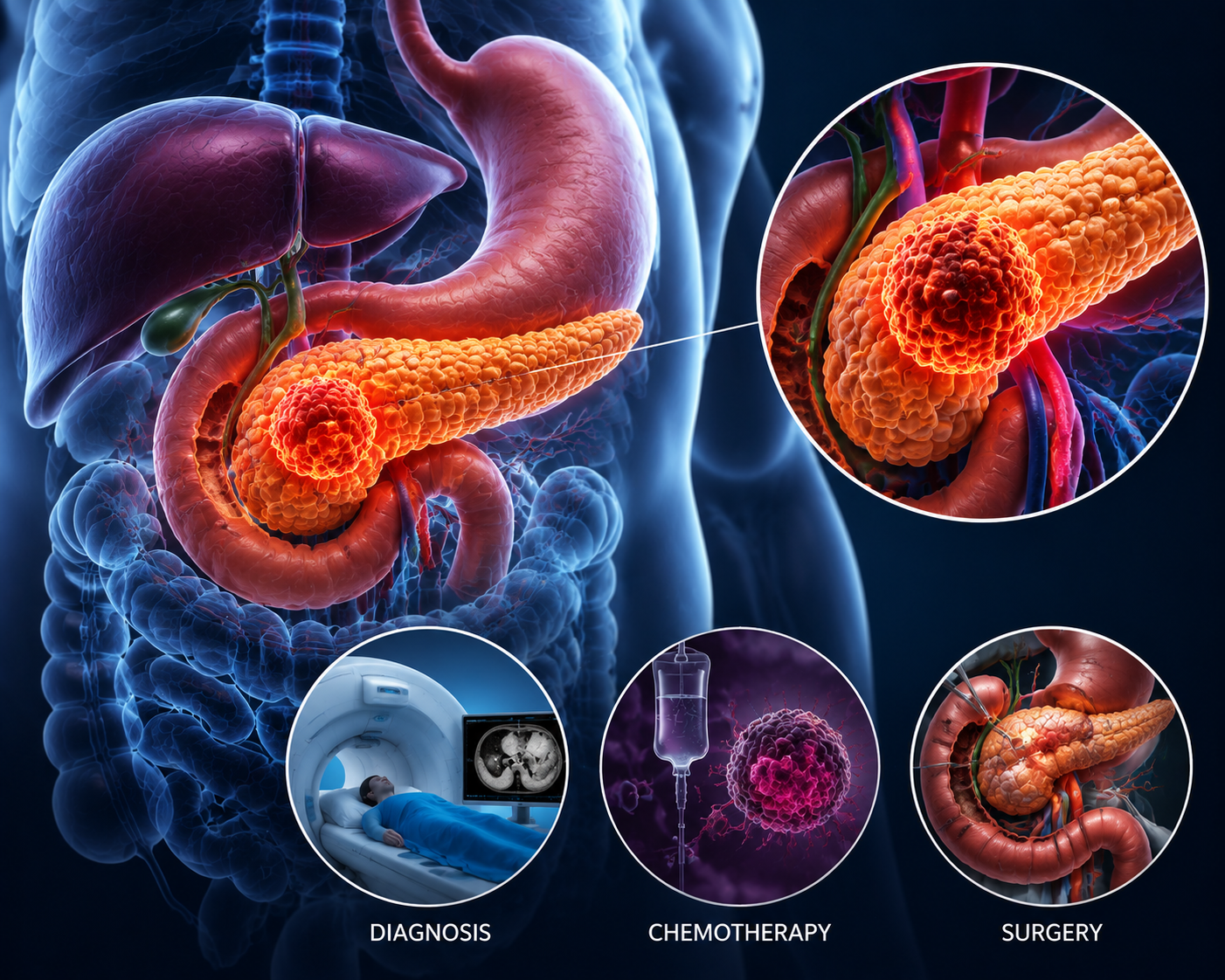
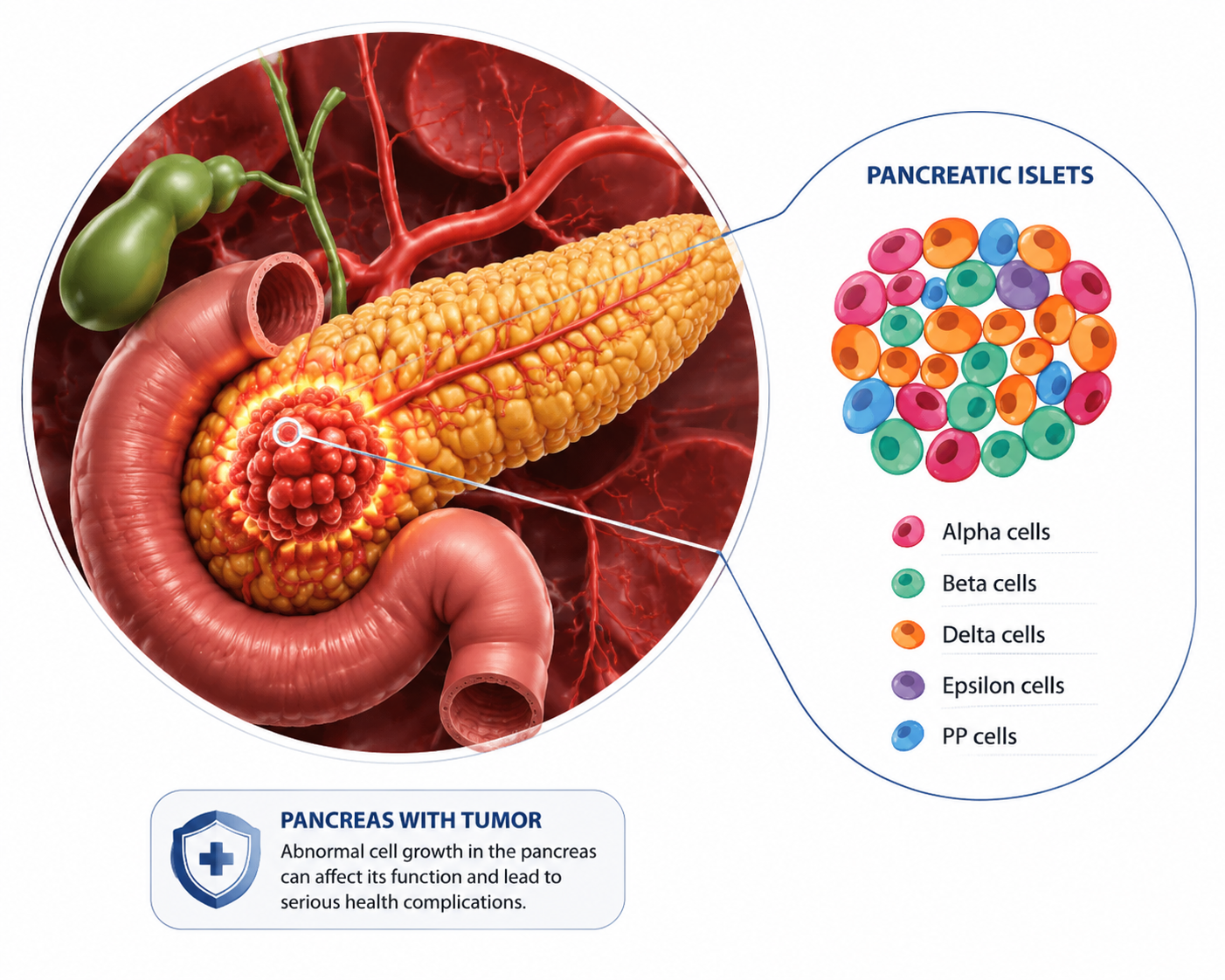
Advanced Diagnosis, Personalised Treatment, and Comprehensive Pancreatic Cancer Care
A diagnosis of pancreatic cancer can be overwhelming, but early detection, accurate diagnosis, and timely treatment can improve outcomes and quality of life. At GEM Cancer Centre, we provide comprehensive Pancreatic Cancer Treatment in Coimbatore through advanced diagnostic technology, experienced gastrointestinal (GI) oncology specialists, and personalised treatment plans designed according to each patient's condition.
Our multidisciplinary team includes GI surgical oncologists, medical oncologists, radiation oncologists, gastroenterologists, radiologists, pathologists, nutrition specialists, pain management experts, and oncology nurses. Together, they develop evidence-based treatment strategies based on the tumour stage, location, overall health, and individual treatment goals.
Since the pancreas is located deep inside the abdomen, early pancreatic cancer may not cause noticeable symptoms. Advanced imaging, molecular testing, robotic surgery, and modern cancer therapies have improved treatment options for many patients.
Treatment depends on the tumour size, location, stage, and overall health. Options may include surgery, chemotherapy, radiation therapy, targeted therapy, immunotherapy, or a combination of treatments.
Whether you require pancreatic surgery, the Whipple procedure, robotic-assisted surgery, chemotherapy, radiation therapy, targeted therapy, immunotherapy, or supportive care, our specialists provide compassionate treatment using advanced medical techniques.
Patients seeking expert pancreatic cancer care can rely on GEM Cancer Centre for advanced diagnosis, personalised treatment, and continuous support throughout their cancer journey.
The exact cause of pancreatic cancer is not always known, but several factors may increase the risk.
Common risk factors include:
Having risk factors does not mean a person will definitely develop pancreatic cancer. However, persistent symptoms and increased risk should be evaluated by a specialist.
Early symptoms of pancreatic cancer can be difficult to identify. Seek medical evaluation if you experience:
These symptoms may also occur due to non-cancerous conditions. However, persistent symptoms require evaluation by a pancreatic cancer specialist.
Accurate diagnosis is essential for planning effective treatment. At GEM Cancer Centre, specialists use advanced investigations to diagnose and stage pancreatic cancer.
Pancreatic protocol CT scan, MRI and MRCP, PET-CT scan, and Endoscopic ultrasound (EUS) help evaluate tumour size, blood vessel involvement, lymph node spread, and disease progression.
A biopsy confirms the diagnosis by examining tumour tissue under a microscope. Pathology results help identify the cancer type and guide treatment decisions.
Selected patients may undergo molecular testing for markers such as BRCA1, BRCA2, KRAS, MSI, and NTRK to identify targeted treatment opportunities.
Treatment depends on cancer stage, tumour location, and overall health.
The Whipple procedure (pancreaticoduodenectomy) is commonly performed for tumours located in the head of the pancreas. Robotic-assisted Whipple surgery may provide improved precision, smaller incisions, reduced blood loss, and faster recovery for suitable patients.
For tumours in the body or tail of the pancreas, robotic distal pancreatectomy may be considered. This minimally invasive approach helps remove cancer while preserving healthy tissue whenever possible.
Chemotherapy may be recommended before surgery, after surgery, or for advanced pancreatic cancer. Treatment is personalised according to each patient's condition.
Radiation therapy may help control locally advanced cancer or reduce recurrence risk. Patients with specific genetic or molecular changes may benefit from targeted therapy or immunotherapy after specialist evaluation.
GEM Cancer Centre is a high-volume referral centre specializing in complex pancreatic surgeries. Our GI oncologists, surgical teams, and support staff coordinate care to achieve optimal treatment margins and post-operative recovery.
At GEM Cancer Centre, our experienced GI oncology team provides comprehensive Pancreatic Cancer Treatment in Coimbatore through advanced technology, multidisciplinary expertise, and personalised treatment planning.
Each treatment plan is developed after evaluating:
Why Patients Choose GEM Cancer Centre
Recovery continues after completing treatment. GEM Cancer Centre provides ongoing support to help patients manage side effects and maintain quality of life.
Follow-up care includes:
Regular monitoring helps detect recurrence early and supports long-term wellness.
The cost of pancreatic cancer treatment depends on:
During consultation, our specialists explain treatment options and provide guidance based on individual healthcare needs.
If you experience persistent abdominal pain, jaundice, unexplained weight loss, digestive problems, or have been diagnosed with pancreatic cancer, seek expert medical advice without delay.
Our experienced GI oncology specialists provide advanced diagnosis, personalised treatment plans, and comprehensive Pancreatic Cancer Treatment in Coimbatore using evidence-based therapies.
Book your consultation today and take the first step towards expert pancreatic cancer care at GEM Cancer Centre.